
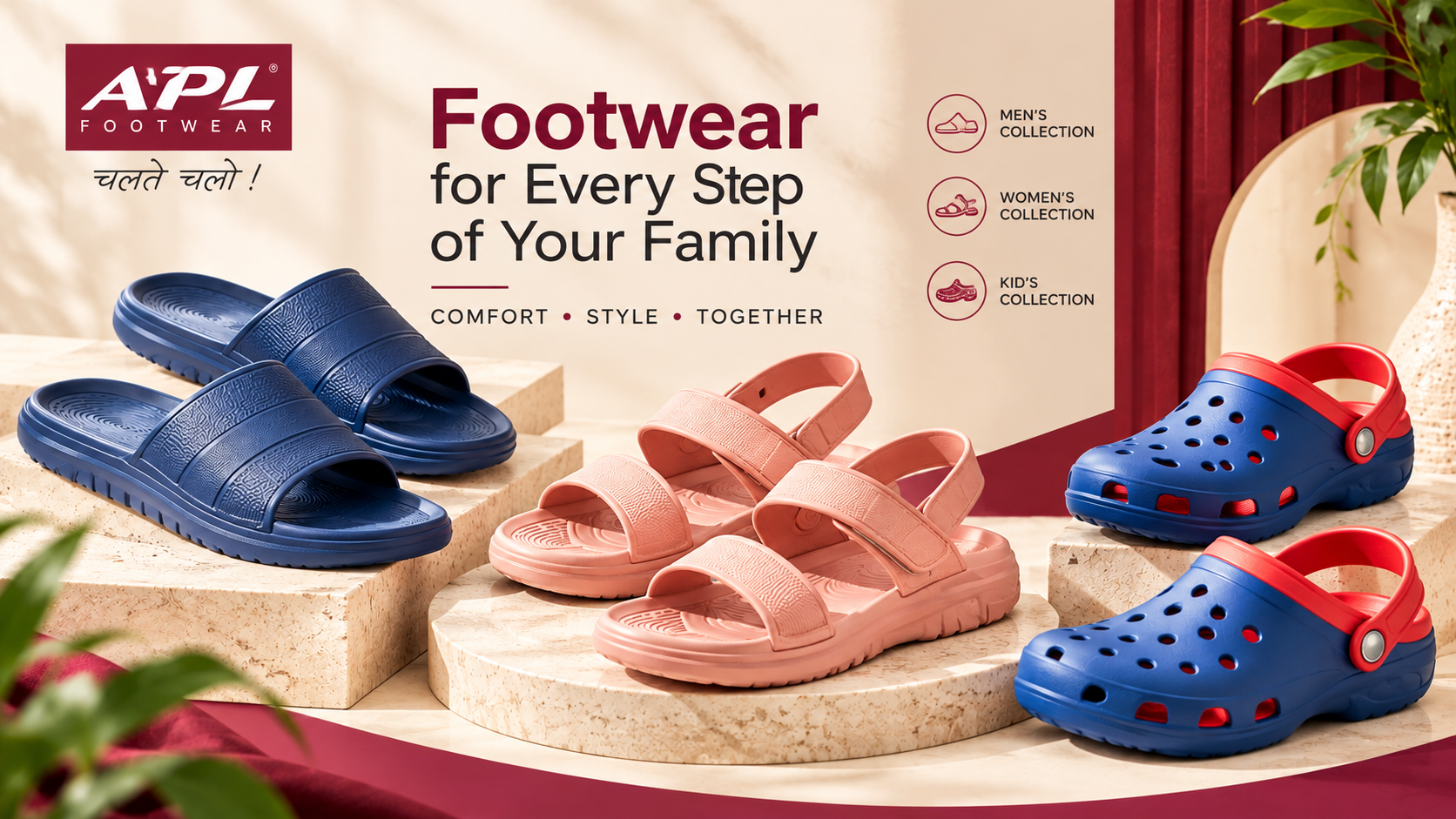
How to Choose the Right Everyday Footwear for Men, Women and Kids
The right footwear can make everyday routines simpler. From relaxing at home and running errands to travelling or spending time with family, footwear should suit the activity, fit properly and match the wearer’s preferences.
With so many styles, colours and materials available, choosing the right pair can feel confusing. The best starting point is to focus on practical requirements before considering appearance.
APL Footwear offers a range of footwear styles for men, women and children. This guide explains what to consider when comparing everyday footwear and how to narrow down the options.
1. Start with the intended use
Before choosing a design, consider where and how the footwear will be used.
For home use: Simple slippers may be suitable for indoor routines, depending on their fit and sole design.
For casual outdoor wear: Sliders, sandals and flip-flops offer different levels of coverage and foot retention. Choose a style appropriate for the surfaces and activities involved.
For travel: Weight, packing convenience, fit and ease of maintenance may be important considerations.
For play and active routines: Choose footwear specifically suitable for the activity. Ordinary slippers and casual sandals are not automatically suitable for running, sports or rough terrain.
A clear understanding of the intended use helps prevent choosing a product based on appearance alone.
2. Check fit before anything else
A good fit is one of the most important considerations when selecting footwear.
Look for the following:
- Adequate space for the toes
- Appropriate width across the foot
- No uncomfortable rubbing or pressure points
- A secure feel during normal walking
- No excessive movement or slipping within the footwear
Sizing can vary between designs and manufacturers, so do not assume that every product will fit identically.
For children’s footwear, check fit regularly as their feet grow. A design that looks appealing may not be suitable if it is too small, too large or difficult to keep securely on the foot.
3. Choose a style that suits your routine
Men’s everyday footwear
Men’s casual footwear often includes sliders, flip-flops, slippers and selected sandal designs.
When choosing a pair, consider:
- Whether the design suits indoor or outdoor use
- Strap placement and overall fit
- Sole thickness and surface texture
- Neutral or bold colour preferences
- How easily the footwear can be cleaned
Navy, black, brown and neutral shades can be versatile options, while brighter colours and distinctive patterns can offer a more expressive look.
Women’s everyday footwear
Women’s casual footwear includes a wide range of silhouettes, colours and decorative details.
When comparing designs, consider:
- Strap shape and placement
- Footbed shape and overall fit
- Colour coordination with everyday clothing
- Ease of putting on and removing the footwear
- The intended setting and walking surface
Minimal sliders may suit simple daily styling, while colourful sandals or patterned designs can offer a different visual character.
Style is a personal choice, but it should not come at the expense of fit and usability.
Kids’ everyday footwear
Children’s footwear should be selected with particular attention to fit, secure placement and the intended activity.
Consider:
- Age-appropriate sizing
- A shape that accommodates the child’s foot
- Suitable grip for the intended surface
- Ease of putting on and taking off
- Construction appropriate for the activity
Bright colours, playful patterns and character-inspired designs can make footwear appealing to children. However, fit and suitability should remain the deciding factors.
4. Understand the material
Different materials offer different characteristics, and the best option depends on the product and its intended use.
EVA is commonly used in casual footwear because it can provide a lightweight feel, flexibility and cushioning characteristics. Other materials and constructions may offer different levels of structure, surface texture or durability.
When comparing footwear, consider the complete product rather than assuming that the material name alone determines performance.
The sole, straps, moulding, construction and finish all contribute to how a pair looks and feels.
5. Look at the sole and surface design
The sole plays an important role in how footwear interacts with the ground.
When choosing everyday footwear, consider whether the sole design is appropriate for the surface on which it will be worn.
Look for a well-finished sole, a suitable tread or texture and a stable fit. Wet, polished or uneven surfaces may require footwear specifically designed for those conditions.
Do not assume that every lightweight or water-friendly product is slip-resistant. Check the manufacturer’s stated suitability and any relevant product specifications.
6. Balance appearance with practical comfort
A footwear design may look excellent on a shelf but still feel unsuitable after wearing it.
Where possible, try the footwear on and walk normally to assess the fit. Pay attention to rubbing, pressure, excessive movement and whether the straps hold the foot appropriately.
If the product is being purchased online, review the available sizing information and product details before ordering.
For individuals with specific foot conditions or specialist footwear requirements, professional guidance may be appropriate.
7. Think about care and durability
Everyday footwear is exposed to dust, moisture, regular handling and different environmental conditions.
To help maintain your footwear:
- Follow the manufacturer’s cleaning instructions.
- Avoid using chemicals that could damage the material.
- Keep footwear away from excessive heat unless the product instructions specify otherwise.
- Allow wet footwear to dry appropriately.
- Inspect the sole and straps periodically for visible wear or damage.
Actual durability depends on product construction, materials, frequency of use and care. No material or design should be assumed to last equally well under every condition.
A quick footwear selection checklist
Before making a decision, ask yourself:
- Is this pair suitable for the activity?
- Does it fit securely and comfortably?
- Is the sole appropriate for the intended surface?
- Are the material and construction suitable for regular use?
- Is the design easy to maintain?
- Does it meet my style and budget preferences?
If the footwear meets these requirements, you will be in a better position to make an informed choice.
Explore the APL Footwear range
Everyday footwear should combine practical considerations with a design that suits the wearer.
APL Footwear’s range includes styles for men, women and children, offering visitors an opportunity to explore different silhouettes, colours and casual footwear categories.
Whether you prefer a simple slider, a versatile flip-flop, a decorative sandal or a colourful kids’ style, reviewing the catalogue is a useful starting point for comparing the available options.
Frequently asked questions
Which footwear is best for everyday use?
The right choice depends on the activity, fit, surface, construction and personal preference. There is no single style that suits everyone.
Are sliders better than flip-flops?
Neither style is universally better. Their suitability depends on fit, strap design, foot retention and the intended activity.
How should I choose footwear for children?
Prioritise suitable sizing, secure fit, age-appropriate construction and suitability for the intended activity.
How often should everyday footwear be replaced?
Replace footwear when it shows significant wear, damage, loss of fit or other signs that it is no longer suitable for its intended use.
Conclusion
Choosing everyday footwear involves more than selecting a colour or design. Fit, intended use, material, sole construction, care and overall usability all deserve consideration.
By understanding these factors, consumers can make more informed choices for themselves and their families.
Explore the APL Footwear catalogue to discover the available styles for men, women and children.